

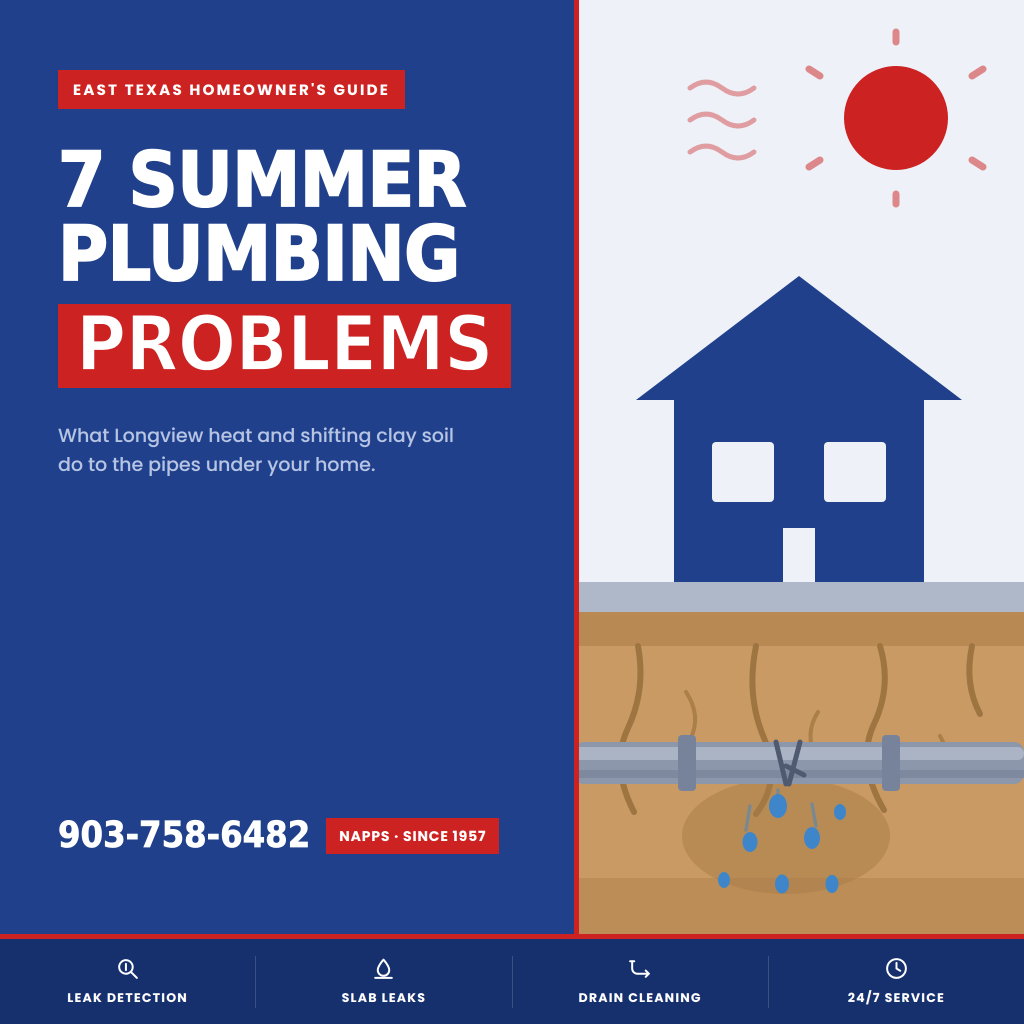
7 Summer Plumbing Problems East Texas Homeowners Face (and How to Prevent Them)
When most people think about summer in East Texas, they worry about their air conditioner—not their plumbing. But the same heat, drought, and heavy household use that stress your AC in July and August also put real strain on your pipes, drains, and water heater. In and around Longview, the summer months are one of the busiest times of year for plumbing calls.
The good news is that most summer plumbing problems give you warning signs before they turn into an emergency. This guide walks through the seven issues we see most often in East Texas homes during the hottest part of the year, plus simple steps you can take to prevent a small problem from becoming a costly repair.
Why Summer Is Hard on East Texas Plumbing
East Texas summers combine high heat, long dry spells, and heavier water use than any other season. Kids are home, guests come to visit, laundry piles up, and lawns and gardens demand more water. At the same time, our clay-heavy soil dries out and shifts during drought, putting pressure on the pipes buried under and around your home.
Put those factors together and your plumbing system simply works harder in the summer. A little attention now can help you avoid backups, leaks, and water damage when you least expect them.
1. Slab Leaks From Shifting, Drought-Dried Soil
The expansive clay soil common across East Texas expands when it’s wet and shrinks when it dries out. During a hot, dry Longview summer, that shrinking soil can shift your home’s foundation just enough to crack or loosen the water lines running beneath the slab. The result is a slab leak—one of the most damaging plumbing problems a homeowner can face.
Watch for warning signs like a spike in your water bill, warm or damp spots on the floor, the sound of running water when everything is off, or a drop in water pressure. If you notice any of these, don’t wait. Our team can pinpoint the source with our slab leak detection and repair service before it undermines your foundation.
2. Spiking Water Bills and Hidden Leaks
Summer water bills naturally climb with lawn watering and extra laundry, which makes it easy to overlook a hidden leak. But a running toilet, a dripping supply line, or a small break behind a wall can waste hundreds of gallons and cause slow, hidden water damage.
If your bill jumps more than the season alone can explain, it’s worth investigating. A professional leak detection visit uses specialized equipment to find hidden leaks fast, without tearing up walls or floors to go looking for them.
3. Overworked Water Heaters
Your water heater doesn’t get a break in the summer. More showers after yard work, extra loads of laundry, and houseguests all mean more demand. Sediment that builds up in the tank over time makes the unit work even harder, which shortens its life and drives up energy use.
If you’re running out of hot water faster than usual, hearing popping or rumbling noises from the tank, or noticing rusty water, your water heater may need attention. Learn more about repair, maintenance, and tankless upgrades on our water heater services page.
4. Clogged Kitchen Drains From Summer Cooking
Summer means more cooking, more entertaining, and more grease going down the drain. Fats, oils, and food scraps cool and harden inside your pipes, building up until water drains slowly or backs up entirely.
To keep drains clear, never pour grease down the sink—collect it in a container and throw it away instead. Run plenty of cold water while using the disposal, and avoid rinsing large amounts of food scraps down the drain. When a clog is stubborn or keeps coming back, our drain cleaning and sewer services can clear it and keep it clear.
5. Garbage Disposal Jams
Backyard cookouts and garden harvests send a lot of extra waste through the garbage disposal in the summer. Fibrous produce like corn husks, watermelon rind, celery, and potato peels can jam the unit or tangle the blades, and starchy or greasy scraps can clog the drain below it.
Feed waste into the disposal a little at a time, always run cold water while it works, and keep fibrous, starchy, and greasy items out of it altogether. If your disposal hums but won’t turn, or drains slowly no matter what you do, it may need a professional look.
6. Outdoor Faucet, Hose Bib, and Sprinkler Leaks
Summer is when your outdoor plumbing works overtime, and it’s also where leaks hide in plain sight. A dripping hose bib, a cracked spigot, or a broken sprinkler line can waste a surprising amount of water and go unnoticed for weeks because it’s outside.
Check your outdoor faucets and irrigation for drips, wet spots, or unusually green patches of lawn that could signal an underground line leak. Catching these early keeps your summer water bill in check and protects the pipes where they enter your home.
7. Sewer Line Backups
Summer is tough on sewer lines for two reasons. During drought, tree roots search out the moisture inside your sewer pipes and work their way in through tiny cracks, and sudden summer storms can overwhelm older or already-compromised lines. Either way, the warning signs are the same: multiple slow drains, gurgling toilets, or a sewage smell in the yard.
A backed-up sewer line is not a wait-and-see problem. If you’re seeing these signs, our drain cleaning and sewer services include camera inspection and hydro jetting to clear roots and buildup, and our main line repair service handles damaged lines before they back up into your home.
When to Call a Professional
Some summer plumbing tasks—like watching your water bill or keeping grease out of the drain—are easy to handle yourself. Others should always go to a licensed plumber. Call a professional if you notice any of the following:
- A sudden, unexplained jump in your water bill
- Warm or damp spots on your floor
- Multiple drains backing up at once
- No hot water or discolored water
- The sound of running water when nothing is on
- A sewage odor inside or around your home
When a plumbing problem can’t wait, our 24/7 emergency plumbers are available around the clock across Longview and East Texas.
Frequently Asked Questions
Why does my plumbing act up more in the summer? Higher water use, houseguests, extra cooking, and outdoor watering all increase demand on your system. At the same time, East Texas drought dries and shifts the clay soil around your pipes, which can cause slab leaks and sewer line damage.
Is a small leak really worth fixing right away? Yes. Even a slow leak can waste hundreds of gallons and cause hidden water damage or mold over time. Finding and fixing it early is almost always cheaper than repairing the damage later.
How can I prevent summer plumbing problems? Keep grease and fibrous food out of your drains, watch your water bill for unexplained spikes, check outdoor faucets and irrigation for leaks, and schedule professional service at the first sign of trouble.
Stay Ahead of Summer Plumbing Problems
You can’t control the East Texas heat, but you can keep it from turning into a plumbing emergency. Watching for early warning signs and acting quickly is the best way to protect your home and avoid a costly repair during the busiest season of the year.
Since 1957, Napps Cooling, Heating, and Plumbing has helped Longview and East Texas homeowners keep their plumbing running smoothly through every season. If something doesn’t look right, contact us to schedule service before a small summer issue becomes a big one.